
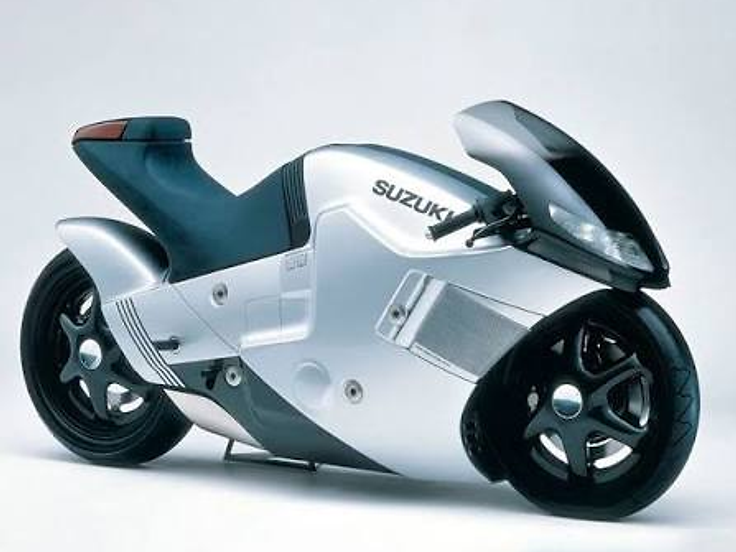
The Suzuki Nuda was one of the most ambitious motorcycle prototypes of the 1980s, combining familiar GSX-R750 performance with a chassis and drivetrain that looked decades ahead of contemporary production machines. Introduced in 1986, it was developed as an operating research motorcycle rather than simply a futuristic styling exercise.
Its engine was derived from the oil-cooled, 749cc inline-four used in the GSX-R750, but Suzuki equipped the concept with an electronic fuel-injection and engine-management system. Unlike the Falcorustyco's proposed hydraulic transmission, the Nuda used mechanical drive shafts to transmit power to both wheels. The shafts were housed within single-sided suspension arms, with additional transmission components distributing engine torque between the front and rear.
The front wheel featured hub-center steering rather than telescopic forks. A mechanical linkage connected the handlebars to the steering kingpin, while a supplementary hydraulic system reduced steering effort. This combination was intended to preserve a direct mechanical connection between rider and front wheel while compensating for the additional resistance created by the front-drive equipment.

Suzuki also experimented extensively with materials and aerodynamics. The Nuda used a carbon-fiber honeycomb monocoque chassis, composite wheels, and perimeter-mounted brake discs positioned near the wheel rims. An unusual surface-mounted oil cooler was integrated into the fairing, transferring engine heat through the motorcycle's bodywork instead of relying on a conventional exposed radiator.
Even the riding position was experimental. The seat incorporated a mechanism allowing it to shift laterally, helping reposition the rider's weight when cornering.


The Nuda was demonstrated running at Suzuki's Ryuyo test facility, although contemporary footage showed relatively gentle riding rather than full-performance testing. A theoretical top speed of approximately 280km/h was reported, but should not be mistaken for an independently verified test result.
Despite the engineering work and associated patents, Suzuki never introduced a production Nuda. Its complicated all-wheel-drive system, extensive carbon-fiber construction, and specialized steering components would have been expensive to manufacture and service. Several of its individual ideas, including electronic engine management and perimeter brakes, would later become far more familiar in motorcycling.


