

For a few days, they're the most important cars in the building. They get the best lighting, the biggest crowds, and a steady stream of photographers trying to capture every angle. Then the auto show ends. The crowds leave, the displays come apart, and the cars that promised us the future are loaded onto trucks. Some won't be seen in public again for decades. Others are quietly dismantled, sold to collectors, or tucked away in company warehouses.
A few have managed to escape far stranger fates. So what actually happens to concept cars after their public debut? The answer depends on what they were built to do, who owns them, and whether anyone thinks they're worth keeping.
⠀

Not every concept car is a working automobile
It's easy to assume that every vehicle displayed at an auto show has an engine, a transmission, and all the components needed to drive away. That's frequently not the case. Some concept cars are little more than elaborate display models. Their bodywork might be made from fiberglass or composite materials, with interiors assembled specifically for photography and public appearances. Even their wheels may serve no purpose beyond allowing the vehicle to be moved around a display floor.
Others are genuine engineering prototypes, fitted with experimental powertrains, suspension systems, and electronics that manufacturers are still developing. There are also fully operational concept cars that could theoretically be driven on public roads, although getting permission to do so is another matter. These differences become important when the vehicle has finished its job.
An incomplete styling study has little practical value outside a design studio. A historically significant show car might eventually become a museum exhibit. An experimental test vehicle could contain components that were never approved for public use. And sometimes the manufacturer simply doesn't have room to keep everything.
Some concept cars really do end up at the crusher
It sounds wasteful, particularly considering how much time and money can go into developing a single vehicle. But manufacturers have been destroying experimental cars for decades. There are legitimate reasons. Prototype vehicles can contain unapproved safety systems, experimental components, confidential technology, or engineering modifications that make them unsuitable for public sale.
BMW offers a particularly revealing example. At its Recycling and Dismantling Centre in Germany, the company processes several thousand vehicles annually. Most are pre-production test vehicles that cannot be sold to customers. Usable components can be recovered, valuable materials recycled, and the remaining structures dismantled.
These are primarily development prototypes rather than the glamorous show cars displayed at Geneva or Detroit. Still, they illustrate an uncomfortable reality of automotive development. A vehicle can be perfectly functional and still have no future beyond the testing program it was built for. Fortunately, not every experimental car meets that fate.
The 1954 Oldsmobile F-88 Concept escaped destruction and became a multimillion-dollar collectible
General Motors produced some extraordinary show cars during its Motorama era, but preserving them wasn't always a priority. Many were intended to be destroyed once their promotional usefulness ended. The 1954 Oldsmobile F-88 was one of the lucky ones.
Designed under Harley Earl, the F-88 was a fiberglass-bodied two-seat roadster with Corvette-related underpinnings and a 324-cubic-inch Oldsmobile V8. Its proportions were familiar, but its gold bodywork, distinctive front end, and elaborate detailing made it unmistakably different from Chevrolet's sports car.

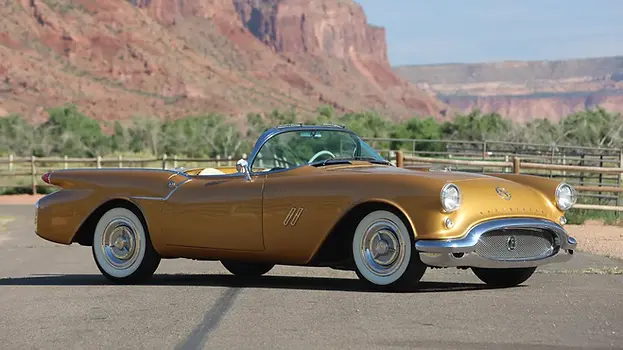
The F-88 never entered production. One example survived, however, eventually finding its way into private hands and undergoing restoration. In January 2005, it sold at Barrett-Jackson's Scottsdale auction for $3.24 million. That's quite a second career for a car GM never intended to put in its dealerships.
The F-88 is also a reminder that the surviving vehicles don't necessarily represent everything a manufacturer created. Sometimes one example survives while others disappear, leaving historians to reconstruct the original program from photographs and factory documents.
The 1955 Lincoln Futura Concept became the Batmobile
Few concept cars have enjoyed a stranger career change than the Lincoln Futura. Built by Ghia in Italy for Ford, the 1955 Futura was an extravagant vision of American motoring's future. Its twin transparent canopies, exaggerated tailfins, and long, low body made it one of the most recognizable dream cars of the decade. Unlike many styling exercises, it was fully operational.
After its original promotional duties ended, the Futura eventually found its way to Hollywood customizer George Barris. He reportedly purchased it from Ford for just $1. In 1966, Barris transformed the vehicle into the original Batmobile for the Batman television series starring Adam West.

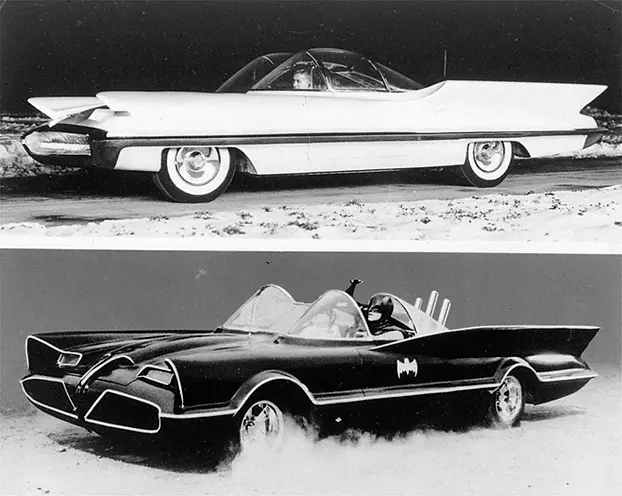
The Futura's dramatic proportions proved remarkably suitable for the role. Its canopies remained recognizable, while the body received new fins, bat-themed detailing, and the black-and-red paintwork that would become instantly associated with the show. The car spent decades in Barris's collection before selling for $4.62 million at auction in 2013.
Had it remained in Ford's storage, the Futura might have become an interesting footnote in design history. Instead, it became one of the world's most famous television cars.
The 1970 Ferrari 512S Modulo Concept waited nearly 50 years to become a proper driver
The 1970 Ferrari 512S Modulo looked like something that had escaped from a science-fiction film set. Designed by Paolo Martin at Pininfarina, the Modulo was built around Ferrari 512S racing-car architecture. Its body was an extraordinarily low wedge, with partially covered wheels and a canopy that slid forward to provide access to the cabin. It debuted at the 1970 Geneva Motor Show.
For decades, the Modulo remained primarily a static design object rather than a usable sports car. That changed in 2014 when American collector James Glickenhaus purchased the one-off from Pininfarina. He wanted more than a museum piece.


His team undertook the considerable engineering work required to make the car operational, restoring mechanical systems and addressing problems that had never mattered when the Modulo was simply sitting on a display stand. By 2018, it was moving under its own power. For a car designed nearly half a century earlier, that was a fairly remarkable achievement.
The Modulo demonstrates another possibility for surviving concept cars. A committed owner can sometimes take an experimental design further than its original manufacturer ever intended. Of course, having the resources to resurrect a hand-built Ferrari prototype helps.
The 2004 Ford Shelby Cobra Concept found its way back to the engineer who developed it
When Ford unveiled the Shelby Cobra concept in 2004, it wasn't merely a fiberglass tribute to Carroll Shelby's original sports car. The silver roadster was a fully functioning prototype built around Ford GT-derived engineering, with a naturally aspirated 6.4-liter V10 mounted ahead of the passenger compartment. Despite considerable interest, Ford never put it into production. The story could have ended there.


Instead, the Cobra appeared at a charity auction in 2017, where retired Ford executive Chris Theodore purchased it for $825,000. Theodore had helped lead the team responsible for creating the car. Few concept vehicles get the opportunity to return to someone personally involved in their development.
The Cobra changed hands again in 2021, selling for $2.64 million at Mecum's Monterey auction. A vehicle that had never been available to ordinary customers had become an extraordinarily valuable collector car. The Shelby Cobra is just one of the many experimental vehicles from a particularly ambitious period in automotive design. Story Cars has documented more than 200 vehicles associated with that year in its complete archive of 2004 concept cars.
The 1956 Chrysler Norseman Concept never even made it to the auto show
Then there are the concept cars that never got to enjoy their moment in the spotlight. The 1956 Chrysler Norseman was built by Ghia in Turin, Italy, for Chrysler's experimental design program. Its unusual engineering included a nearly pillarless passenger compartment, aluminum bodywork, and a cantilevered roof structure intended to provide exceptional outward visibility.

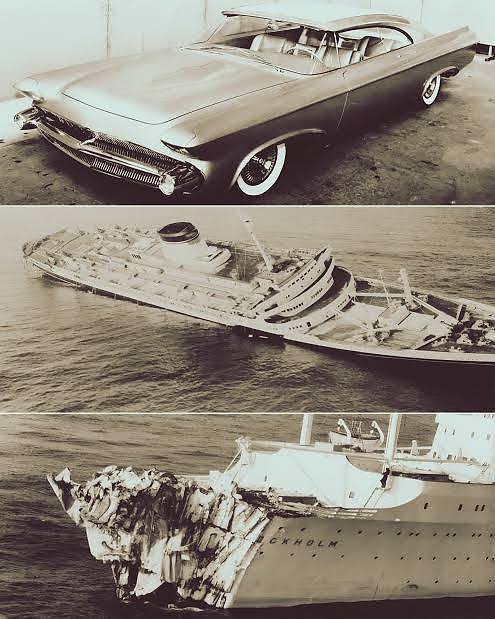
After construction was completed, the car was prepared for shipment to the United States aboard the Italian ocean liner SS Andrea Doria. It never arrived. On July 25, 1956, the Andrea Doria collided with the Swedish passenger liner Stockholm off the coast of Nantucket, Massachusetts. The ship sank the following morning. The disaster claimed 51 lives across the two vessels. Among the cargo lost aboard the Italian liner was Chrysler's one-of-a-kind Norseman.
The human tragedy was immeasurably greater than the loss of an experimental automobile. For automotive historians, though, the Norseman remains a remarkable case of a significant design project disappearing before the public ever had an opportunity to examine it. Its story survives through photographs, documents, and the recollections of people involved in its development. We explored its design, construction, and disappearance in our full history of the 1956 Chrysler Norseman.
Can you actually buy a concept car?
Yes, although opportunities are uncommon. As the F-88 and Shelby Cobra demonstrate, manufacturers and collectors occasionally release experimental vehicles into private ownership. The difficulty is finding one that's genuinely available.
Concept cars rarely follow conventional production-car sales channels. Some have no standardized identification numbers, while others lack the equipment or documentation required for road registration. A working engine doesn't automatically make a concept road legal. Even when an experimental car can be registered, ownership may require custom fabrication, specialized mechanical knowledge, and access to components that were never commercially manufactured.
For collectors, those complications can be part of the attraction. A production Ferrari can be serviced using factory documentation and an established network of specialists. A one-off concept might require someone to recreate a component that was hand-built 50 years ago. The buying price is only the beginning.
The stories don't end when the show closes
Every year, manufacturers unveil new concept vehicles, promising changes to the cars we'll drive in the future. Some of those ideas eventually reach production. Others are quietly abandoned. But the vehicles themselves often have stories that extend well beyond their original presentations.
A discarded styling exercise becomes a valuable collectible. A forgotten prototype is rescued from storage. A futuristic Ferrari finally gets to drive. A Lincoln becomes the Batmobile. And somewhere beneath the Atlantic, the remains of Chrysler's Norseman are still part of a shipwreck. That's what makes researching these cars so interesting. Their original purpose explains why they were built. What happened afterward is often the better story.
At Story Cars, we document the concept cars, prototypes, and one-off machines that rarely make it into conventional automotive history books. If you enjoy finding out what happened to the cars that never reached production, subscribe to the Story Cars newsletter for new discoveries, unusual automotive histories, and the occasional deep dive into the archive.


